The 1954 Royal Tour
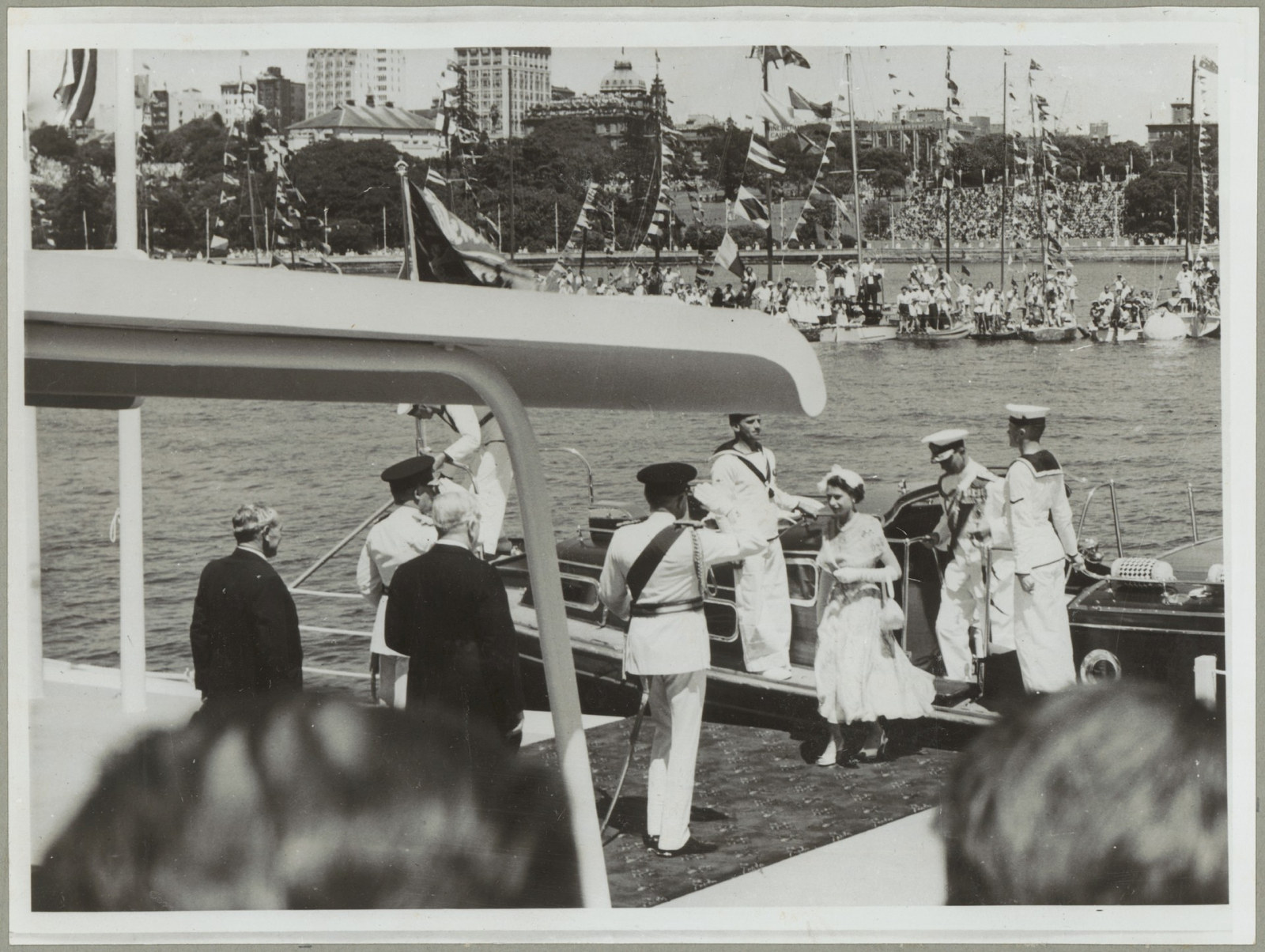
On 3 February 1954, Queen Elizabeth II and Prince Philip, Duke of Edinburgh arrived at Farm Cove in Sydney to commence their Royal Tour of Australia. It was the first time a reigning British monarch had visited the country and Her Majesty "received the most tumultuous greeting Sydney has ever given a visitor."[Trove]
Browse highlights from the Sydney and NSW portion of the tour - 3 to 18 February 1954 - including the decorations and illuminations of public buildings and parks in Sydney and the schedule of events and visits.
Arrival
Travelling the country by air, sea and land the Royal Tour began in Sydney and finished two months later in Fremantle, Western Australia on 1st April 1954.
Welcoming crowds
An estimated 1 million people descended upon the Sydney streets and Farm Cove to greet the Queen and the Duke of Edinburgh, "the surging crowds receiving them with gay abandon."[Trove] Another half a million people crowded the foreshore vantage points for the evening fireworks display.
Those unable to attend the historic occasion could listen to the arrival on ABC Radio.
Sydney schedule
A whirlwind schedule saw Her Majesty, Queen Elizabeth II and Prince Philip, Duke of Edinburgh visiting much of Sydney and New South Wales.
Events
Official events included the investiture of Sir Hudson Fysh (founder of QANTAS) at Government House and the opening of NSW parliament, the Lord Mayor's Ball at Sydney Town Hall and a surf life saving display at Bondi Beach.
A state banquet at David Jones
School children's gatherings
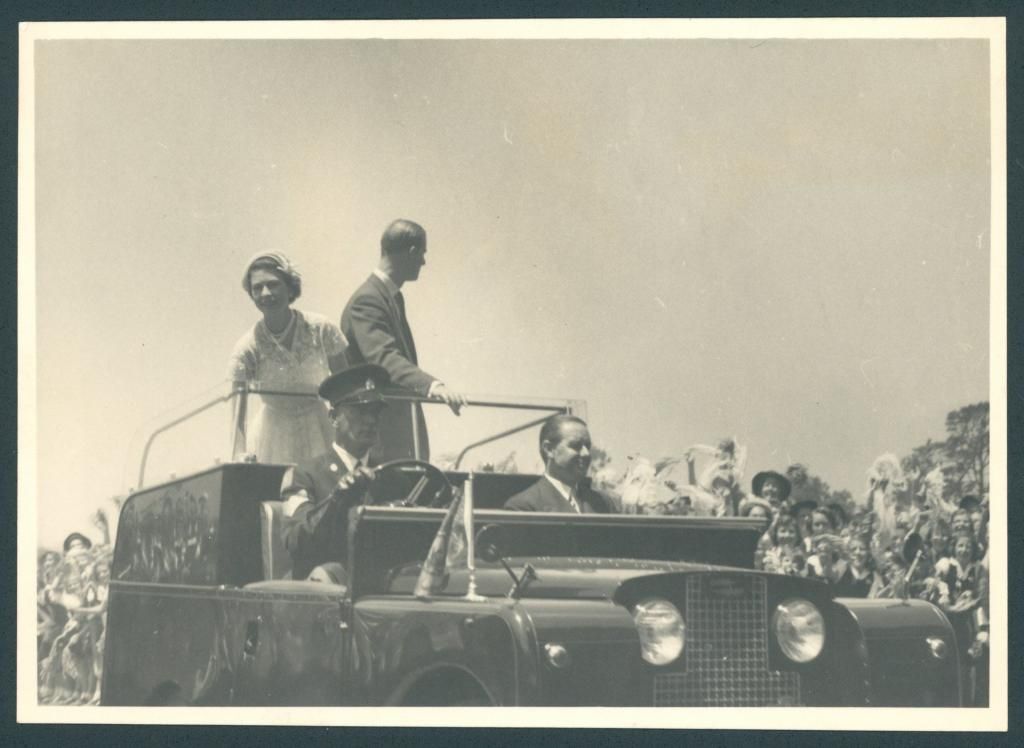
Among the many events that the Queen and Prince Philip attended were four children's gatherings allowing over 150,000 children to see the Royal visitors. Children assembled at the Sydney Cricket Ground, Sydney Showground, Centennial Park and Concord Park where the Queen and the Duke were driven among the children in an open car. It was thought to be the "biggest mass movement of children ever attempted in the world."[Trove]
Decorations
Sydney streets and buildings were decorated in preparation for the Royal Visit.
Country NSW tour
The New South Wales portion of the tour included visits to Broken Hill, Wagga Wagga, Wollongong, Newcastle, Katoomba and Bathurst. The Royal Train was used for two journeys: one from Sydney to Newcastle on 9 February and from Bathurst to Sydney on 12 February.
Departure
On leaving Sydney, Queen Elizabeth II sent a letter of thanks to the Governor of New South Wales.
At the time, the Royal Tour was the largest event ever planned in Australia. The extensive itinerary of visiting 57 cities and towns across all states and territories (except the Northern Territory) allowed some 75% of the population to see the Queen.[ABC]
Related
A wedding present for Princess Elizabeth
The engagement of Princess Elizabeth to Lt Philip Mountbatten was officially announced on 9th July 1947. By the end of August, discussions were underway within the NSW Government as to a suitable wedding present for Princess Elizabeth
Published on
More stories
Browse all
The Wasmuth Portfolio
Frank Lloyd Wright’s Wasmuth Portfolio, is regarded as one of the most influential architectural treatises of the 20th century

Cultivating a therapeutic landscape
Tracing the evolution of the Parramatta Female Factory to a hospital

Excavating Australia’s first Government House
Did you know that when you walk into the Museum of Sydney, you’re walking over the remains of one of the most significant buildings in Australia’s history?
Celebrating federation
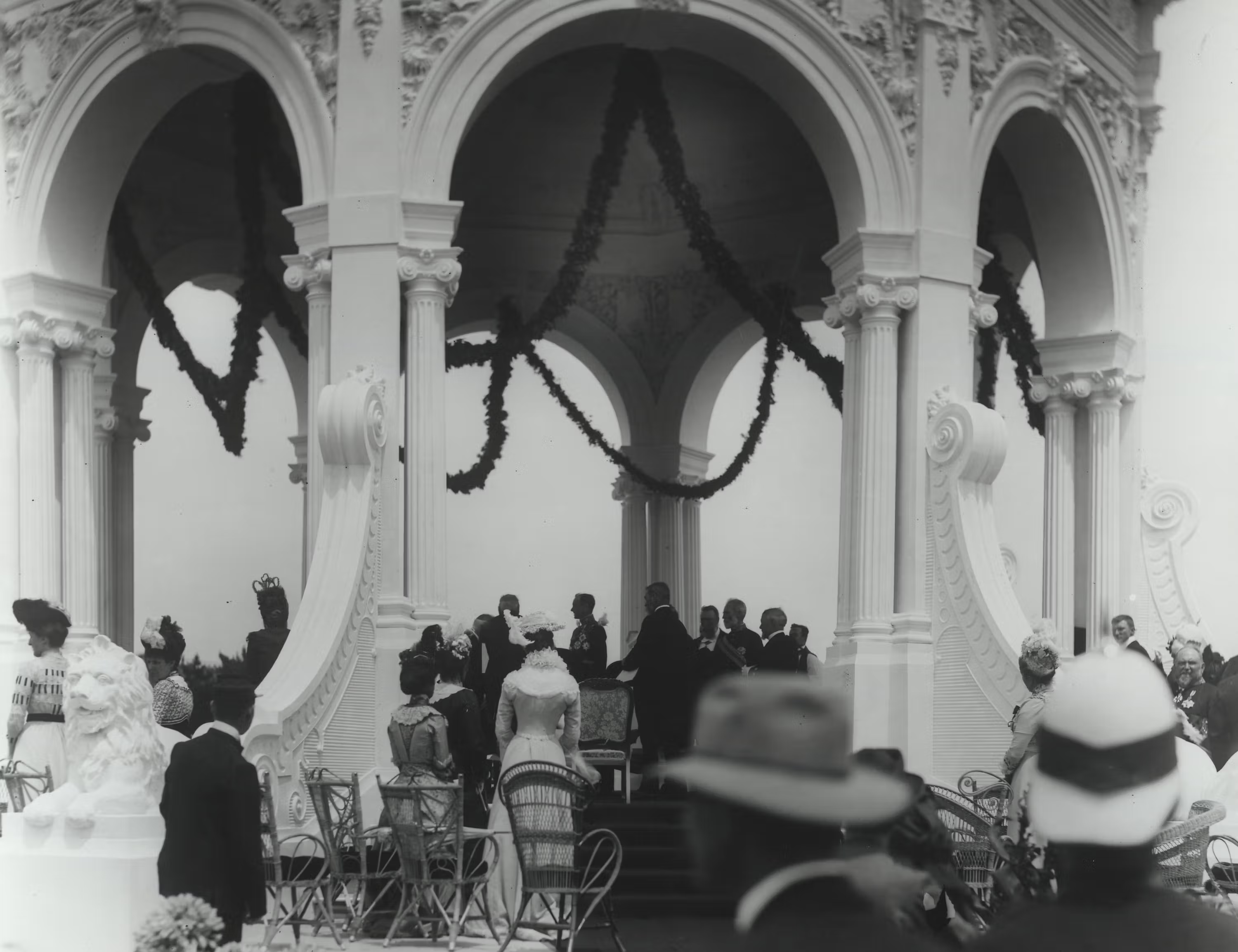
The Commonwealth of Australia was proclaimed on 1 January 1901. The Federation Pavilion in Sydney’s Centennial Park was the focus of the inauguration ceremonies and a five mile procession through the decorated streets of Sydney was greeted by large crowds