Bebarfalds
Bebarfalds was a retailer of home furnishings and manufacturer of furniture, trading for many years from its landmark location opposite the Sydney Town Hall on the corner of George and Park Streets.
The establishment date of the company is variously given in Bebarfald’s later catalogues as either 1852 or 1864. However, the founder of the company, Barnet Bebarfald (c1831-1894), arrived in Melbourne from England in 1852, and by 1857 was in partnership trading as Harris & Bebarfald at 19 Lonsdale Street West. Bebarfald had set up his own business by 1860 as an ‘importer’ but in 1863 left Melbourne for new horizons in New Zealand, establishing an enterprise in Dunedin. Finally in the early 1870s, the Bebarfald family moved to Sydney: in the 1873 Sydney Sands directory, Barnet Bebarfald is listed as operating a ‘furniture warehouse’ at 256 Pitt Street.
Around 1894, Bebarfalds moved to its long-term home opposite Sydney Town Hall. The company soon acquired the adjoining premises and around 1907 constructed a new four-storey building across the site. A catalogue from this period, Where and how to furnish, (FTC 749.20491 BEB) illustrates the wide range of home furnishings sold by Bebarfalds – the list of departments included furniture, bedsteads, bedding, linoleum, carpets, furnishing drapery, manchester, crockery, glassware, ironmongery, go carts, perambulators, pianos, mangles, etc. By 1920 Bebarfalds had begun manufacturing its own furniture: the Redfern factory is illustrated on the back of its Sectional catalogue of medium priced furniture (TC 749.20491 BEB/20).
Bebarfalds has arguably become best remembered for its sewing machines, introduced around 1917, and branded as ‘Blue Bird’ from about 1926. Elegant timber cabinets made at Bebarfalds’ furniture factory concealed British-made Vickers sewing machines, giving the impression of a substantial piece of furniture that would sit in harmony with other home furnishings. Bebarfalds offered customers free dress making courses and established an advisory bureau headed by Mona Moncrieffe. The c1929 catalogue, More frocks for less money (TC 646.1 BEB/30), is an overview of the services offered to sewing machine customers and suggests the success of the enterprise: a sewing machine factory was established in the Sydney suburb of Leichhardt and a new showroom set up in Collins Street Melbourne.
Bebarfalds also established a home planning bureau and in 1927 published a substantial volume, Safe home planning (TCQ 728.37 BEB/27). This book, subtitled ‘the most complete and most authoritative book on home planning, building and furnishing ever compiled and produced in Australia’, included contributions from a number of experts including architect Augustus Aley and landscape designer Max Shelley, and covered subjects ranging from purchasing land for a home to installing electricity, planning a garden and every aspect of furnishing the home. The bureau also offered a proto interior decorator service where customers could be supplied individually-tailored home furnishing schemes.
In 1929, the company constructed a new eight-storey building designed by architects Kent & Massie on the site of its old premises. The building still stands though two-storeys were added by 1967 resulting in the removal of the heavy cornice. About this time Bebarfalds considered expanding its business beyond home furnishings to include drapery, millinery and fancy goods but decided against this enterprise and sold off its unused drapery showcases in 1934. Instead, in 1931 the company invited Woolworths to open a new branch of its store across a section of the ground floor space.
Expansion of the business included the opening of new branches: in 1940, Bebarfalds stores were located at Newcastle, Parkes, Wollongong and Lismore, as well as a BlueBird sewing machine showroom in Brisbane. After World War II suburban branches were opened and by 1965 these included Parramatta, Cabramatta, Caringbah, Fairfield, Janalli, Maroubra, Stanmore, Sutherland and West Ryde. In the same year, however, Woolworths obtained the long-term lease of Bebarfalds city store and in 1968 the company was taken over by Ajax Insurance Limited. Bebarfalds’ suburban stores continued to trade under the Bebarfalds name until around 1973 when they became part of Macy’s Emporium (Sydney) Pty Ltd.
Related materials:
To see all the Bebarfalds material held by the Caroline Simpson Library & Research Collection, go to the library catalogue. View this fully digitised catalogue on Internet Archive
More home furnishings stores
Sydney's home furnishing stores
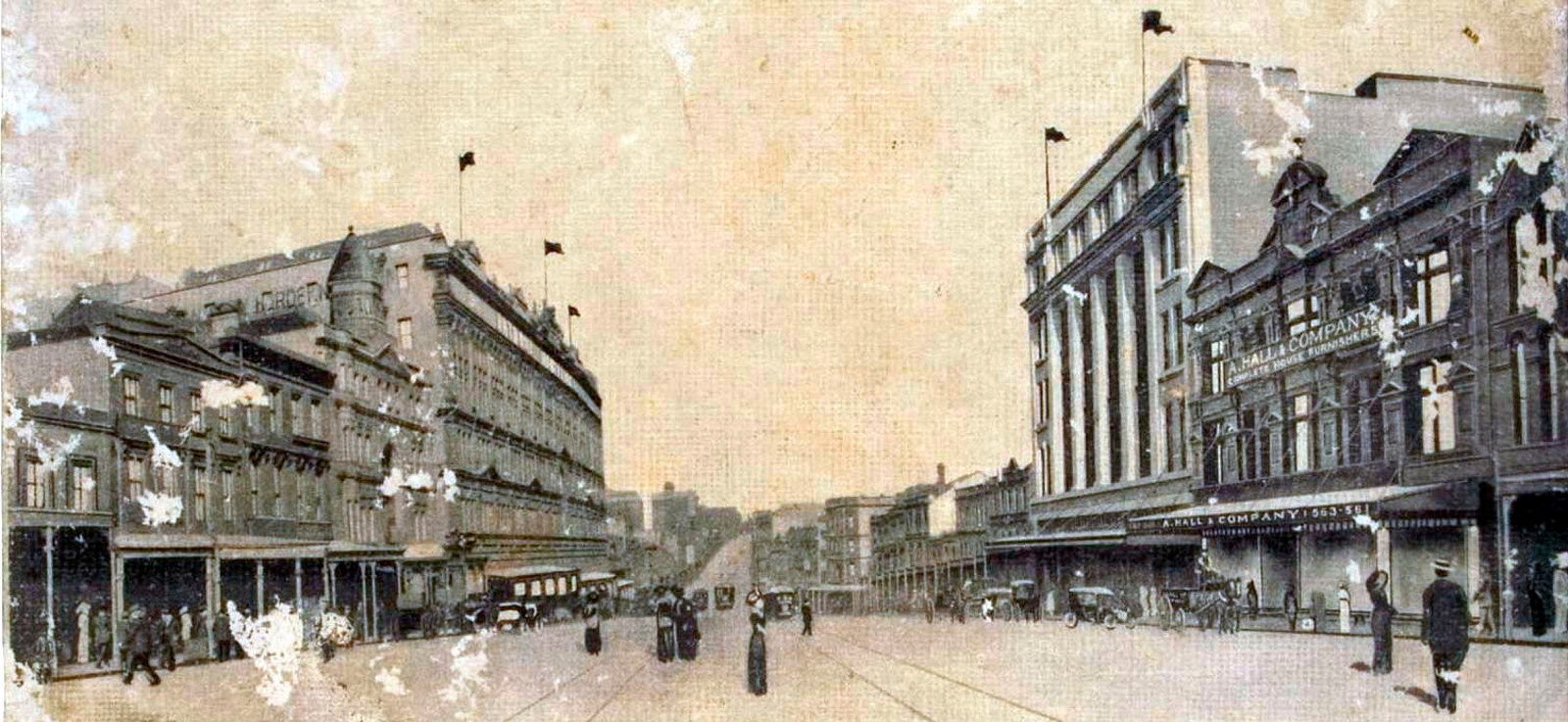
A Hall & Co
A Hall & Co was a retailer of home furnishings and manufacturer of furniture.
Sydney's home furnishing stores
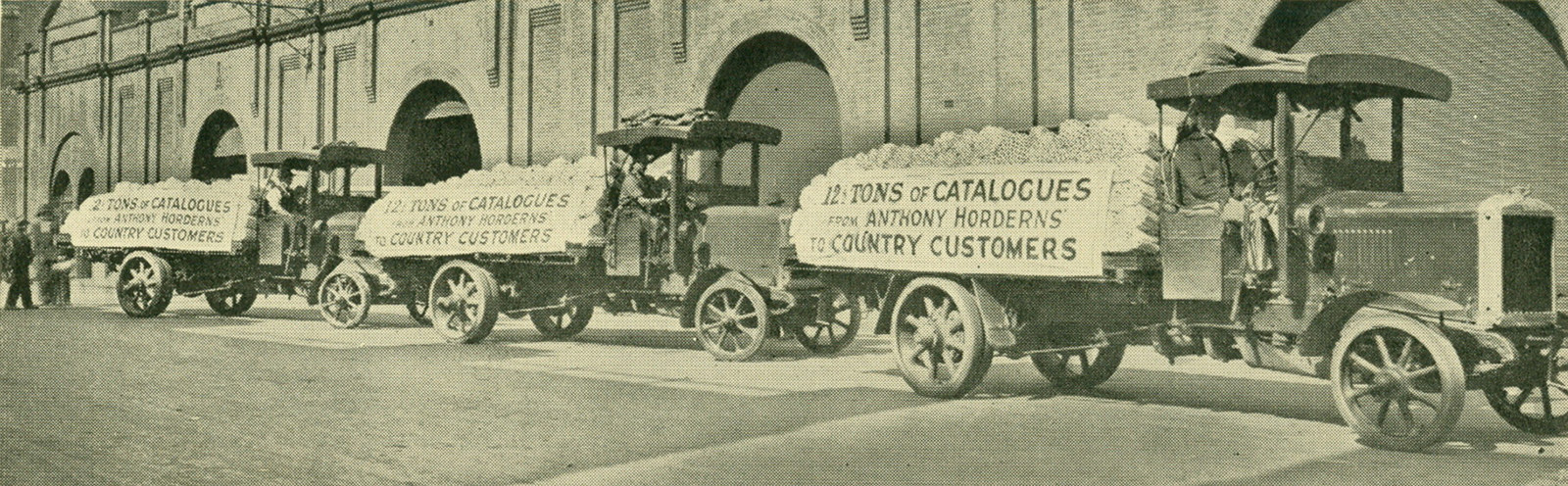
Anthony Hordern & Sons
Anthony Hordern & Sons was arguably Australia's largest retailer from the late 19th through to the mid-20th century.
Published on

Michael Lech
Curator
Michael Lech is a curator at MHNSW. He has worked on exhibitions, presented talks and written extensively on various aspects of the history of the home in Australia. Michael’s work has covered areas such as interior design, the history of wallpapers and furnishing textiles, the heritage movement, Sydney’s department stores and design history in Australia.