Uncovering stories beneath the floor at the Rouse Hill Estate overseer’s cottage
In June 2026, an archaeological team led by Matthew Kelly from Stratum Archaeology excavated beneath the timber floor of the sitting room in the overseer’s cottage at Rouse Hill Estate. The team was focused on investigating archaeological deposits that had built up over more than a century of occupation by different families connected to the property.
Rouse Hill Estate is already well recognised for its heritage significance, but the material found beneath the cottage floorboards may offer a more personal way to understand the everyday lives of the families who lived and worked on the estate.
A rare opportunity
The opportunity to undertake an excavation arose due to planned works to conserve the cottage. During a site inspection to decide on the scope of works, the floorboards were lifted to inspect the building footings, and the research value of the underfloor deposits was immediately clear. There was evidence of rabbit burrows and rat nests, including animal skeletons, as well as artefacts such as glass, ceramics and a coin. Although the deposits had been partly disturbed through bioturbation (soil movement from animal activity), they still had the potential to reveal important information.
Opportunities to investigate intact underfloor deposits are uncommon. Unlike exposed archaeological sites, which are more likely to be affected by weathering, landscaping and other disturbances, spaces beneath the floor can act almost like sealed time capsules. Deposits slowly build up over time, often made up of small everyday objects that have slipped through gaps in the floorboards.
Underfloor deposits are recognised as particularly significant opportunities in historical archaeological practice ... they provide detailed insights into the domestic lives of the structure’s occupants.
The last time a major underfloor excavation was completed at a Museums of History NSW site was at the Hyde Park Barracks in the early 1980s. There, archaeology was able to reveal aspects of convict life that were not described in official accounts. Objects such as gaming tokens and smoking pipes suggested that everyday life at the Barracks did not always follow government rules and restrictions, and pointed to the ways convicts adapted to confinement and institutional control. Much of the archaeological assemblage survived because rats had drawn fragile materials, including fabric, into nests beneath the floorboards. Over time, more than 80,000 artefacts were preserved, trapped under the floor and largely undisturbed for up to 160 years. When investigated alongside the written record, this evidence helped present a fuller and more complex picture of convict life.

A family home
The cottage was constructed by the estate’s overseer Thomas Dickson in around 1858. It was initially a two-room slab construction, including the room in which the underfloor deposits were identified. In 1911, the Sherwood family moved in and extended the cottage for their use, adding a room and kitchen annexe. In 1935, Gerald Terry, a direct Rouse descendant, moved into the cottage with his family and further modified the building. A layer of Congoleum (a felt-based floorcovering similar to linoleum) was laid down over the timber floorboards in the mid-1930s to 1940s, and this may help to provide a relative date for many of the artefacts found.
Unearthing new insights
Through a finely controlled grid excavation, this investigation is a valuable opportunity to add physical evidence to the written record. Many surviving records for Rouse Hill focus on the main house, so the excavation may provide new insights into the daily lives of working families on the estate.
Objects recovered from beneath floorboards are not curated possessions but the accidental remains of everyday life. Finds such as buttons, toy fragments, sewing materials and small household items can offer direct evidence of how occupants lived, worked, played and cared for one another. They may also help show what resources were available to families at different times.
Combining discovered artefacts with written archives and oral histories may allow recovered objects to be connected with identifiable households – such as the Dicksons, the Sherwoods, and Gerald and Peggy Terry and their children – helping to build a picture of work habits and domestic routines that is often missing from official records.
An analysis of the archaeology will focus on how the cottage was used over time: where different activities took place, what kinds of domestic routines were carried out there, and how people ate, dressed, worked, purchased goods and spent their leisure time. Study of the artefacts may also help show whether these patterns changed between different households, how life at the overseer’s cottage compares with other rural sites from the same period, and how animal disturbance has shaped what survives.
Although detailed cataloguing and artefact analysis from the excavation of the overseer’s cottage is still underway, the project is already showing the research value that can be hidden within historic structures. By bringing greater attention to the workers whose labour sustained the property, the findings have the potential to broaden interpretation of Rouse Hill Estate. The excavation also reinforces the importance of including archaeology in heritage conservation practice, and of recognising the traces that historic buildings can preserve of ordinary lives.
Published on

Alex Timms
Heritage Adviser
Alex is a Heritage Adviser at MHNSW, bringing expertise in built heritage, historical archaeology and Aboriginal cultural heritage. His formal studies included history, archaeology, and Aboriginal studies, and he holds a Master of Heritage Conservation from the University of Sydney, where he received the Rodney Connors Prize for Conservation Studies. Alex has worked across private consultancy and major state agencies, including the Office of Environment and Heritage, Heritage NSW and Transport for NSW. Alex provides expert conservation advice for MHNSW’s iconic heritage places. He also leads the drafting of critical planning documents, including conservation scopes, heritage assessments and Conservation Management Plans.
More stories from Rouse Hill Estate
Browse all
Five minutes with a Farm Manager at Rouse Hill Estate
We spoke with Andrew Scarsbrook, Farm Manager at Rouse Hill Estate, about the unique balancing act of managing a historic working farm, caring for its livestock and landscape, and preserving the heritage values that bring its past to life for contemporary audiences
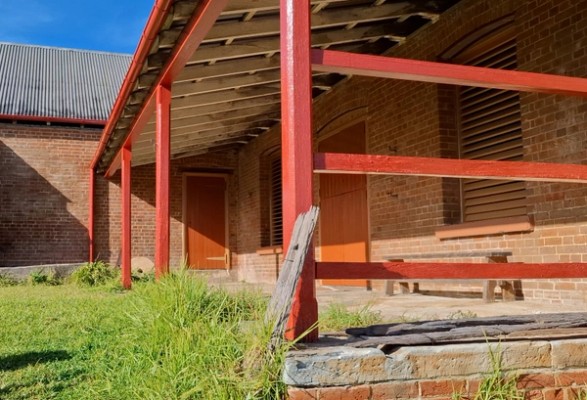
A glimpse behind the scaffold – conservation works at Rouse Hill Estate
Digital Content Coordinator Gabriella Florek took an enlightening tour of ongoing conservation works at Rouse Hill Estate to understand some of the finer details of caring for a complex heritage site

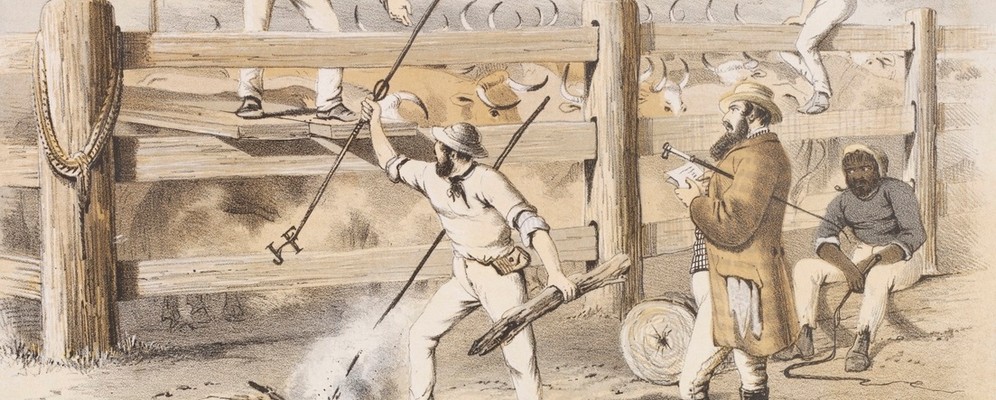
The ‘crooked R’
At Rouse Hill Estate, reminders of the property’s rural past are everywhere, from fence lines and machinery to farm buildings and the myriad odds and ends stored inside them